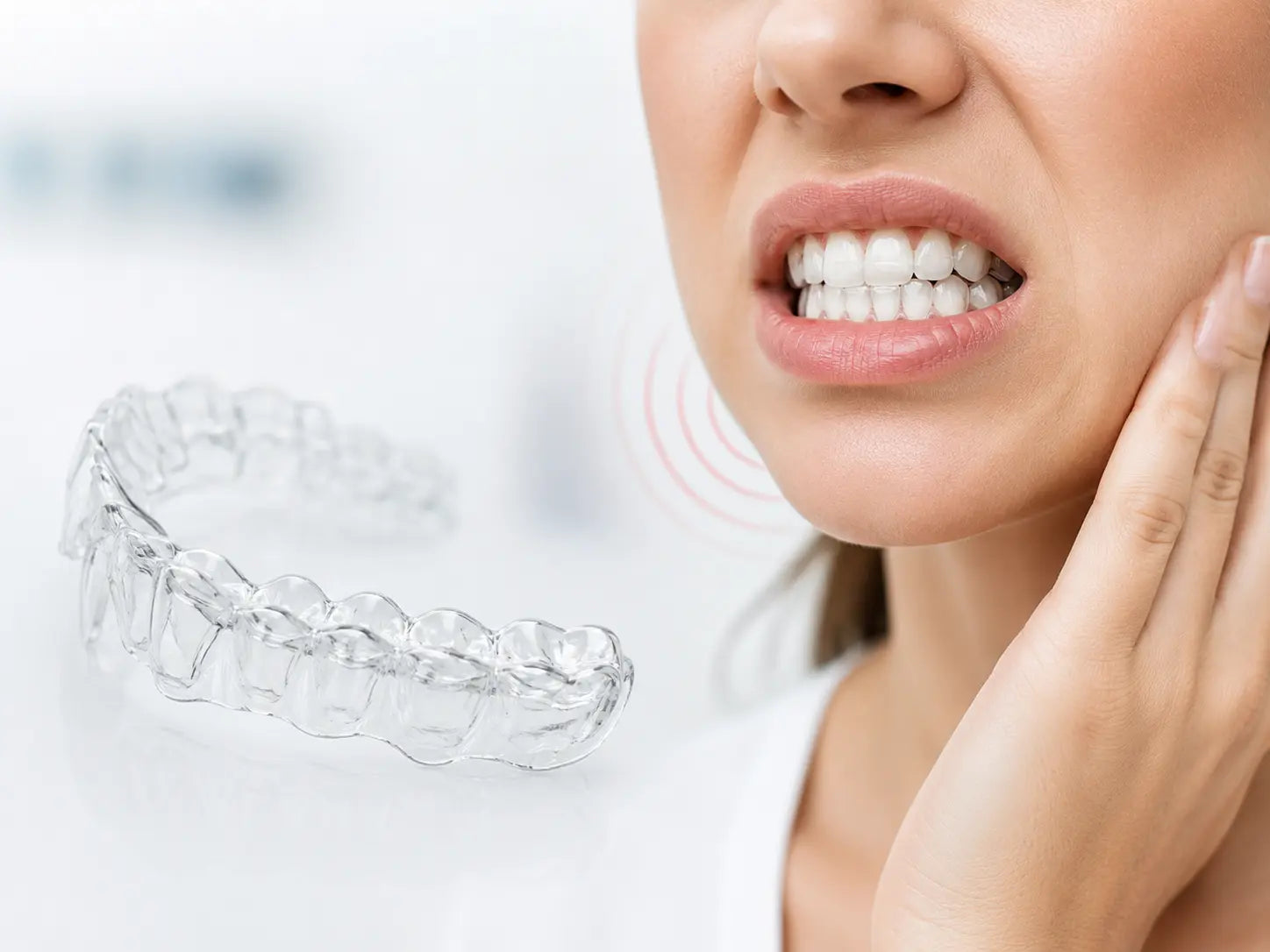
Teeth grinding — clinically known as bruxism — affects an estimated 1 in 3 American adults. Most people associate it with stress, sleep disorders, or a need for a night guard. But what many don't realize is that the root cause of their grinding may actually be a misaligned bite — and that correcting that alignment with clear aligners could reduce or even eliminate the habit altogether. Here's a complete breakdown of how bruxism works, when clear aligners can help, and what to expect if your grinding is related to how your teeth fit together.
Dentist-Led Treatment From $599 100% Satisfaction Guarantee Delivered in Under 2 Weeks
What Is Bruxism?
Bruxism is the involuntary clenching, grinding, or gnashing of teeth. It can happen while you're awake (awake bruxism) or during sleep (sleep bruxism). While occasional grinding is common and usually harmless, chronic bruxism can cause serious damage to your teeth, jaw, and overall oral health.
There are two distinct types:
Awake Bruxism
This typically involves clenching the jaw during moments of concentration, stress, or anxiety. You may catch yourself doing it at your desk, while driving, or during intense focus. It tends to respond well to behavioral awareness techniques.
Sleep Bruxism
This is classified as a sleep-related movement disorder. Because it happens unconsciously, it's harder to control and often goes undiagnosed until a dentist spots the damage. Sleep bruxism generates significantly more force than awake clenching — up to 250 pounds of pressure on your molars.
31%
of U.S. adults grind their teeth
250 lbs
max bite force during sleep grinding
70%
of cases linked to stress or misalignment
Signs and Symptoms of Teeth Grinding
Many people don't know they grind their teeth until a dentist points out the wear patterns or a sleep partner mentions the noise. Here are the most common signs to watch for:
-
Flat, worn, or chipped teeth — especially on the biting surfaces of molars and canines
-
Jaw pain or stiffness — particularly in the morning after a night of grinding
-
Headaches — dull, tension-type headaches that start in the temples
-
Tooth sensitivity — worn enamel exposes the softer dentin layer underneath
-
Earaches — referred pain from the temporomandibular joint (TMJ)
-
Disrupted sleep — for you or your partner
-
Tight or fatigued jaw muscles — a locked jaw that won't open or close completely
-
Inner cheek damage — chewing on the inside of your cheek during clenching
Important to Know If you notice any of these symptoms, it's worth consulting a dental professional. Left untreated, chronic bruxism can lead to cracked teeth, receding gums, TMJ disorders, and even tooth loss. Early intervention — whether through alignment correction, a night guard, or stress management — can prevent thousands of dollars in restorative dental work.
What Causes Bruxism?
Bruxism rarely has a single cause. It's usually the result of several factors working together. Understanding which factors apply to you is the key to choosing the right treatment.
1. Stress and Anxiety
This is the most widely recognized trigger. Emotional tension causes you to clench your jaw unconsciously — particularly during sleep. High-pressure jobs, life changes, and unresolved anxiety are common contributors.
2. Bite Misalignment (Malocclusion)
When your upper and lower teeth don't fit together properly — due to overbite, underbite, crossbite, crowding, or uneven spacing — your jaw muscles have to work harder to find a comfortable resting position. This constant muscular compensation often triggers grinding, especially at night.
3. Sleep Disorders
Sleep bruxism is strongly associated with obstructive sleep apnea, snoring, and other sleep-related breathing disorders. The jaw movements may be a reflexive response to airway disruptions during sleep.
4. Lifestyle Factors
Caffeine, alcohol, smoking, and certain medications (particularly SSRIs and other antidepressants) have been linked to increased bruxism frequency and intensity.
5. Genetics
Sleep bruxism tends to run in families. If a parent or sibling grinds their teeth, you're more likely to as well.
The Alignment Connection Research suggests that malocclusion — misaligned teeth or an uneven bite — is a contributing factor in up to 70% of bruxism cases. When your bite is off, your jaw instinctively searches for a position where all teeth make even contact. That constant searching motion is what produces the grinding movement. Correcting the
underlying bite alignment can remove the mechanical trigger entirely.
Can Clear Aligners Actually Help with Bruxism?
The answer depends on what's causing your grinding. Clear aligners are not a direct treatment for bruxism in the way a night guard protects your teeth from impact. Instead, they address one of the most common root causes: bite misalignment.
Here's how the logic works:
-
Misaligned teeth create an uneven bite — certain teeth absorb more force than they should, and your jaw can't rest in a neutral, balanced position.
-
Your jaw muscles compensate — they constantly micro-adjust, clench, and grind to find equilibrium. This is especially pronounced during sleep when conscious control is absent.
-
Clear aligners correct the alignment — by gradually moving teeth into their ideal positions, clear aligners create a balanced bite where upper and lower teeth meet evenly.
-
The trigger is removed — once your jaw can rest comfortably without compensating, the grinding reflex often diminishes or stops entirely.
4–8 mo
typical aligner treatment for mild-moderate cases
20–22 hr
daily wear for optimal results
$599
Smile Perfect starting price
It's also worth noting that during treatment, the aligners themselves act as a physical barrier between your upper and lower teeth — similar to how a night guard works. So even before alignment is fully corrected, many patients report reduced tooth damage and jaw soreness simply from wearing their trays at night.
When Clear Aligners Can Help — and When They Can't
Clear aligners aren't a universal solution for every type of bruxism. Here's an honest breakdown:
| Bruxism Cause |
Can Aligners Help? |
What to Expect |
|
Bite misalignment (overbite, crowding, crossbite, spacing) |
Yes — primary benefit |
Correcting alignment removes the mechanical trigger. Grinding often reduces significantly or stops after treatment. |
|
Stress-related grinding with mild misalignment |
Yes — partial benefit |
Aligners correct the physical component. Stress management (therapy, exercise, relaxation) addresses the emotional component. Combination approach is most effective. |
|
Stress-only grinding with perfectly aligned teeth |
Limited — protective only |
Aligners won't fix the root cause but trays can protect teeth from damage during treatment. A custom night guard is the primary solution. |
| Sleep apnea-related grinding |
Supportive — not primary |
Sleep apnea requires specific medical treatment (CPAP, oral appliance). If misalignment co-exists, aligners can address that component alongside sleep therapy. |
| Medication-induced bruxism |
No — address with prescriber |
Grinding caused by medication side effects needs to be managed by adjusting the prescription. A night guard protects teeth in the meantime. |
| Severe skeletal jaw discrepancy |
No — beyond aligner scope |
Significant jaw size mismatches may require orthodontic treatment with braces, expanders, or orthognathic surgery. |
Not Sure If Your Grinding Is Alignment-Related?
Take a quick photo-based assessment and get a professional evaluation — completely free. Get Your Free Assessment
Clear Aligners vs. Night Guards for Bruxism
If you grind your teeth, you've probably been told to get a night guard. And that's solid advice — night guards protect your teeth from damage. But they don't fix the problem. Here's how the two approaches compare:
| Factor |
Clear Aligners |
Night Guard |
| Purpose |
Corrects underlying bite misalignment |
Protects teeth from grinding damage |
| Root cause |
Addresses the cause (if alignment-related) |
Manages the symptom only |
| Duration of use |
4–12 months, then retainers |
Indefinitely — every night |
| During treatment |
Trays double as a barrier between teeth |
No teeth movement occurs |
| Cost |
$599–$1,799 (Smile Perfect) |
$200–$800 (custom) / $20–$40 (OTC) |
| Outcome |
Straighter teeth + potentially reduced grinding |
Same bite, protected surfaces |
| Best for |
Grinders with misaligned teeth |
Grinders with aligned teeth or stress-only cause |
Can You Use Both? Absolutely. Many patients use clear aligners during the day and a night guard during the overlap period while their bite is still being corrected. After aligner treatment is complete, your
retainers serve a dual purpose — maintaining alignment and providing a protective barrier at night. Smile Perfect includes two free sets of retainers with every treatment plan.
How Smile Perfect Treatment Works for Grinders
If your bruxism is linked to bite misalignment, Smile Perfect's at-home treatment follows the same proven process as any other alignment case — with your grinding history factored into the treatment plan from the start.
1
Free Assessment
Complete a quick online assessment at
smileperfect.us. It takes under two minutes, requires no payment, and gives you an honest answer about whether clear aligners are likely to address your case. Mention your grinding — it matters for treatment planning.
2
Impressions or Digital Scan
A
home impression kit ships to your door at no extra cost. Alternatively, you can book a professional digital scan at a Smile Perfect partner practice or the Utah scan center.
3
3D Treatment Plan
A licensed Smile Perfect dentist reviews your impressions and creates a detailed 3D treatment plan. You'll see the projected movement of every tooth — and approve it before a single aligner is manufactured. Not happy with the projection? Full refund.
4
Wear Your Aligners
Wear each set of clear aligners for the prescribed period (usually 1–2 weeks per tray) for 20–22 hours a day. During the night, your trays simultaneously work on alignment and shield your teeth from grinding force.
5
Monitor and Complete
Track your progress through
Smile Perfect's dental monitoring app. Your clinical team checks in remotely — no office visits needed. Treatment typically completes in 4–8 months for mild-to-moderate cases.
6
Retain and Protect
After treatment, wear your included retainers every night. They keep your teeth in their corrected positions and continue to act as a physical barrier — giving bruxism patients long-term protection built into their retention routine.
Protecting Your Smile Long-Term
Even after your alignment is corrected, bruxism management is an ongoing process — especially if stress is a contributing factor. Here are the most effective strategies for keeping your teeth safe after treatment:
Consistent Retainer Wear
This is non-negotiable for bruxism patients. Your retainers do double duty: they prevent teeth from shifting back and they cushion against grinding forces. Wear them every night for the first year, then at least 3–5 nights per week indefinitely.
Stress Management
Since stress is a primary trigger, addressing it directly reduces grinding frequency. Regular exercise, adequate sleep, mindfulness practices, and professional support for anxiety can all make a measurable difference.
Jaw Relaxation Exercises
Simple techniques like resting your tongue on the roof of your mouth behind your front teeth, keeping a small gap between your teeth during the day, and gently massaging your masseter muscles before bed can help train your jaw to relax.
Caffeine and Alcohol Reduction
Both substances are associated with increased sleep bruxism. Cutting back — especially in the hours before bed — can reduce nighttime grinding intensity.
Regular Dental Checkups
Your dentist can spot early signs of wear or shifting before they become problems. If you're a known grinder, mention it at every visit so they can monitor for changes and adjust your retainer or recommend additional protection if needed.
Pro Tip Keep your last aligner tray as a backup. If you ever lose or break a retainer, wearing your final aligner at night will prevent teeth from shifting while you order a replacement from Smile Perfect's
retainer pack.
Frequently Asked Questions
Can clear aligners cure bruxism completely?
Clear aligners don't "cure" bruxism in a medical sense. What they can do is correct the bite misalignment that triggers grinding in many patients. If your bruxism is primarily caused by how your teeth fit together, aligning them can significantly reduce or eliminate the grinding habit. If stress or a sleep disorder is the primary cause, aligners alone won't resolve it — but they can still protect your teeth during treatment and improve your bite for long-term comfort.
Will wearing aligners at night protect my teeth from grinding?
Yes. While aligners aren't designed as night guards, the plastic trays create a physical barrier between your upper and lower teeth. This means that even before your alignment is fully corrected, the trays absorb some of the grinding force and prevent direct enamel-on-enamel contact. Many patients report less jaw pain and less visible tooth wear once they start wearing their aligners consistently at night.
Can bruxism damage my clear aligners?
Heavy grinding can cause aligners to wear down faster than normal. You may notice small scratches, thinning, or slight warping on the biting surfaces. In most cases this doesn't affect treatment effectiveness — but if a tray becomes significantly damaged before your scheduled switch date, contact Smile Perfect's clinical team for guidance. Aligner material is designed to withstand normal wear, and replacing a tray during treatment is straightforward.
Should I get a night guard or clear aligners if I grind my teeth?
It depends on whether your teeth are also misaligned. If you have crooked teeth, crowding, gaps, or a bite issue alongside your grinding, clear aligners address both problems simultaneously. If your teeth are already well-aligned and stress is the sole trigger, a custom night guard is probably the more appropriate solution. Many patients benefit from both — using aligners to correct their bite, then transitioning to retainers for ongoing protection.
How do I know if my bruxism is caused by misalignment?
Common indicators include grinding that started or worsened as your teeth shifted over time, uneven wear on specific teeth (suggesting unbalanced bite forces), and jaw discomfort concentrated on one side. A
free smile assessment can help determine if alignment issues are contributing to your grinding. For a definitive diagnosis, a dental professional can evaluate your bite relationship and tooth wear patterns.
How much does clear aligner treatment cost for bruxism-related misalignment?
Smile Perfect treatment starts at
$599 — which includes your full set of custom aligners, two sets of retainers, a professional whitening kit, free shipping, and dentist-led oversight throughout treatment. This is significantly less than traditional in-office orthodontic treatment ($3,000–$8,000) and delivers comparable results for mild-to-moderate alignment cases.
Will my teeth grinding come back after aligner treatment?
If misalignment was the primary trigger and your bite is properly corrected, most patients experience a lasting reduction in grinding. However, grinding can return during high-stress periods or if retainers aren't worn consistently and teeth begin to shift. Wearing your retainers as prescribed is the best long-term protection — both for maintaining alignment and preventing bruxism relapse.
Stop Grinding. Start Smiling.
Join thousands of adults who've improved their bite and reduced teeth grinding with Smile Perfect's at-home clear aligners — starting from just $599.
Start Your Free Assessment


 UK
UK Europe